Based on patient education videos by John Vacovec, PT, founder of Physical Therapy & Sports Rehab. Reviewed by John Vacovec, PT, November 2026.
To sleep more comfortably with a sore shoulder, lie on your back or on your good side, and use pillows to hold up the arm that hurts. Try not to lie on the painful shoulder.
There is no one best position for everyone. Try a few of the ideas below for a couple of nights each, and keep what helps. You will also see four gentle exercises from John Vacovec, PT, and which signs mean you should call a doctor.
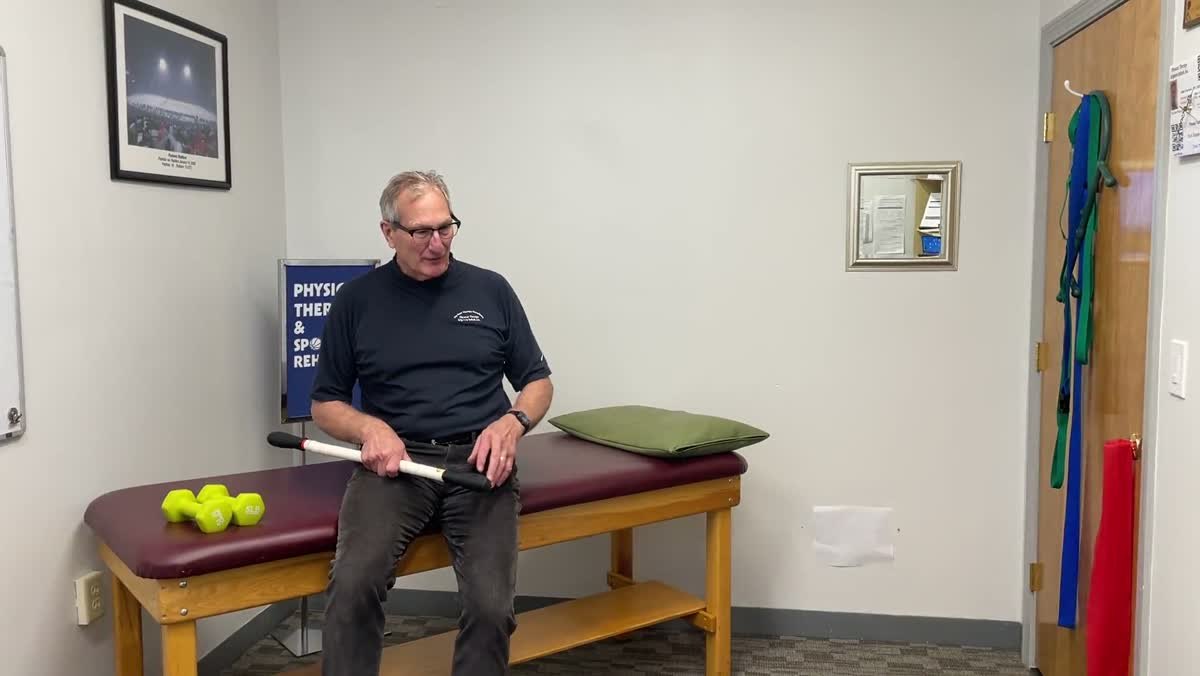
Why does my shoulder hurt more at night?
Lying down changes the resting position of the joint and the muscles and tendons around it. There is also a simple reason you notice it more: during the day, noise, people, movement and other distractions keep your mind busy. In bed, those go away, and your mind starts to focus on one thing, the pain. So it often feels worse.
A few things can make it worse once you are in bed:
- Lying on the sore side. It seems obvious, but your body weight presses on the shoulder, and many people feel it most when they roll over in their sleep. A very small number of people actually feel better lying on the sore side.
- Your arm sinking toward the bed. When you lie on your back, your elbow can drop a little lower than your body. That small change can stress a sore or inflamed shoulder. It can be worse if you have rounded shoulders or poor posture from sitting a lot.
- Your arm up over your head. Some people sleep with an arm tucked under the pillow or stretched over the head, a position you rarely hold during the day. For hours, the tissues around the shoulder and shoulder blade are stretched and the joint itself is squeezed.
Which shoulder problems often hurt at night?
- Rotator cuff tendinitis (also called impingement). The rotator cuff is a group of four muscles and their tendons that help you lift and move your arm. When the tendons stay irritated, inflamed or overstretched for a long time, it affects your daily activities and your sleep.
- A rotator cuff tear. This often causes pain at rest and at night, especially when you lie on that shoulder. A partial or full tear can bring real limits, pain and irritation in daily life.
- Frozen shoulder. The joint capsule gets tight and movement is very limited, so the muscles shorten from lack of use. Some people feel little pain until they reach the end of their movement, so they learn to avoid it. The pain can be worse at night and wake you up.
Sometimes the trouble starts in your neck, and you feel it in your shoulder. Our article on why your neck and shoulders often hurt together explains how that happens.
What is the best sleeping position for shoulder pain?
The best position keeps weight off your sore shoulder and keeps the arm supported. For most people, that means the back or the good side.
On your back
- Lie flat with a pillow that keeps your head level.
- Put a pillow or a folded blanket under your sore arm.
- Check that your elbow is resting about level with your body, not sinking down toward the mattress.
Keep the sore arm down by your side or across your chest. Try not to rest it above your head.
On your good side
- Lie on the side that does not hurt, so the sore shoulder is on top.
- Hug one or two pillows in front of your chest.
- Rest your sore arm on them, so it stays about level with your shoulder.
Under your head, pick a pillow thick enough to keep your head and neck level, so your head does not droop.
Partly sitting up
When a shoulder is very sore, some people find it easier to sleep partly sitting up, for example in a recliner. If you just had shoulder surgery, follow your surgeon's instructions.
Positions to avoid for now
- Most often, lying on the painful shoulder
- Sleeping on your stomach, which often leaves your arm tucked under the pillow
- Sleeping with your arm raised over your head
What can I do before bed to ease shoulder pain?
John's view: "I am a firm believer in using ice." It is not as comfortable as heat, but it helps in two ways. The cold numbs the area, which quiets the nerve endings carrying pain. Then your body works to warm the area back up, bringing more blood, nutrients and enzymes to help it heal.
- Ice. Wrap an ice pack in a towel and hold it on the shoulder for up to 20 minutes. Never put ice right on your skin, and check the skin often so you do not get frostbite.
- Or heat. Moist heat, like a warm shower or a heat pack, can help loosen a stiff shoulder. It is fine to try both on different nights.
- Keep the shoulder moving during the day. Keeping a sore shoulder still can make the pain worse. Gentle movement, like the exercises below, is usually better.
Which gentle exercises help a stiff, sore shoulder?
John shows these four in his videos. Please check with your physical therapist before you start any new exercise. Move slowly, and stop if your pain gets worse or if you feel numbness or tingling.
Forget "no pain, no gain." As John says in his video, "pain is not necessarily better." You are looking for a gentle stretch, not more pain.
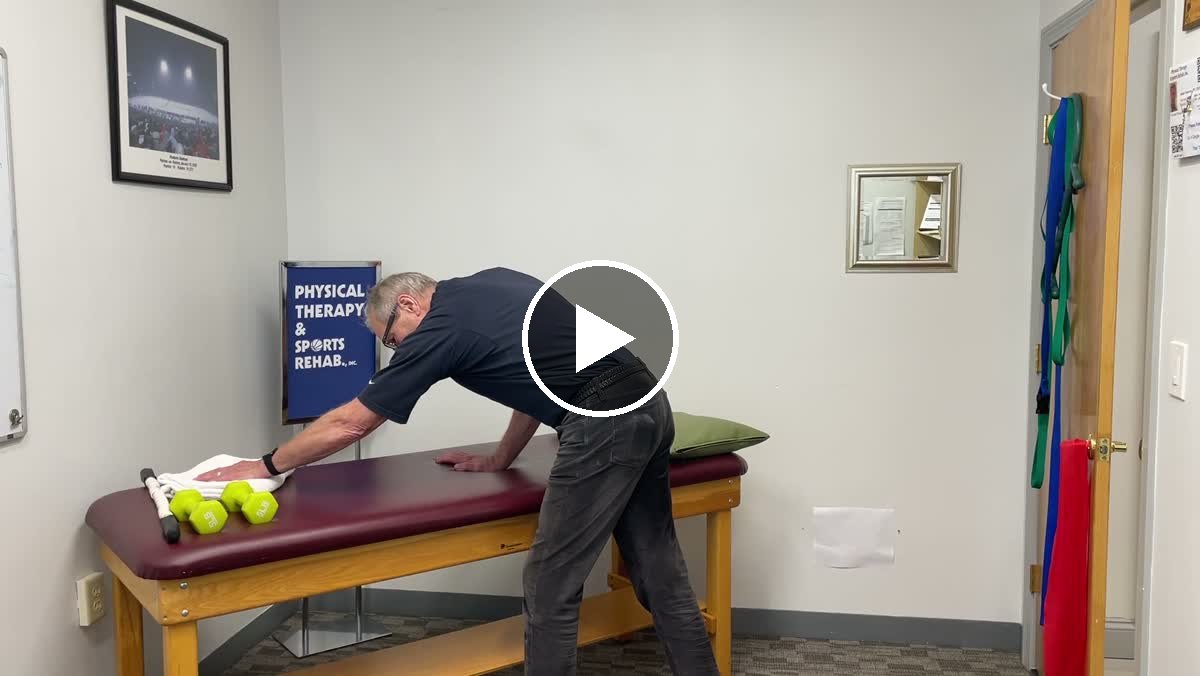
1. Pendulum swings
A good one to start with when your shoulder is very sore. The weight of your hanging arm gives the joint a gentle stretch, and you get it moving without forcing it.
- Stand next to a table or counter and put your good hand on it.
- Lean forward a little and let your sore arm hang straight down. Let it relax.
- Gently rock your body so the arm swings back and forth, then side to side, then in small circles.
- Start with 10 to 20 gentle swings, as many as feels comfortable.
2. Table slides
This helps bring back the forward reach you use to grab things off a shelf.
- Stand beside a table or kitchen counter and rest your sore hand on a towel.
- Slide the towel forward and let your body lean with it, until you feel a gentle stretch.
- Slide it back. Start with 10 to 20 slow slides, based on how it feels.
John's tip: a smooth surface, like a marble or tile counter, makes the towel slide easily. Go to the point of a little stretch, and don't push far past it.
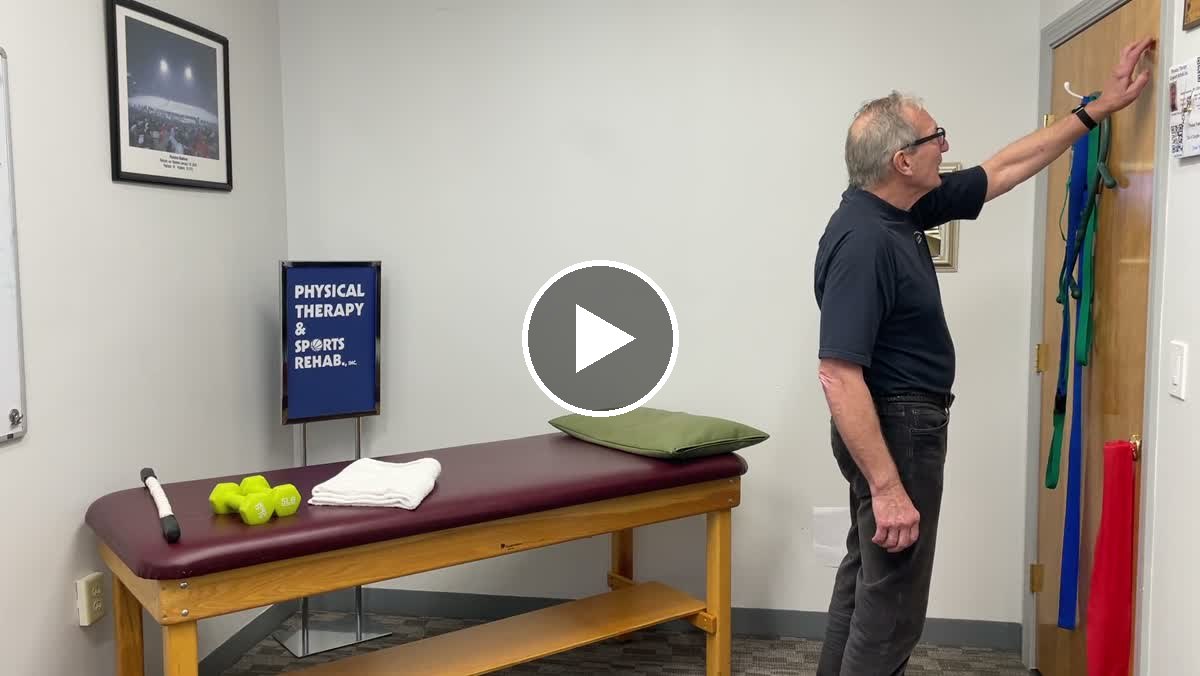
3. Wall climbs
John calls this one of his favorites. It works on reaching up, which is often hard when your shoulder hurts.
- Stand facing a wall and walk your fingers up as high as is comfortable.
- Keep your body straight. Don't lean out to the side.
- Hold for 10 to 15 seconds, then slide your hand back down the wall.
- Start with 5 to 10, as it feels comfortable.
Why slide down instead of dropping your arm? A painful shoulder often does not have the strength to lower the arm slowly on its own. The wall does that work for you.
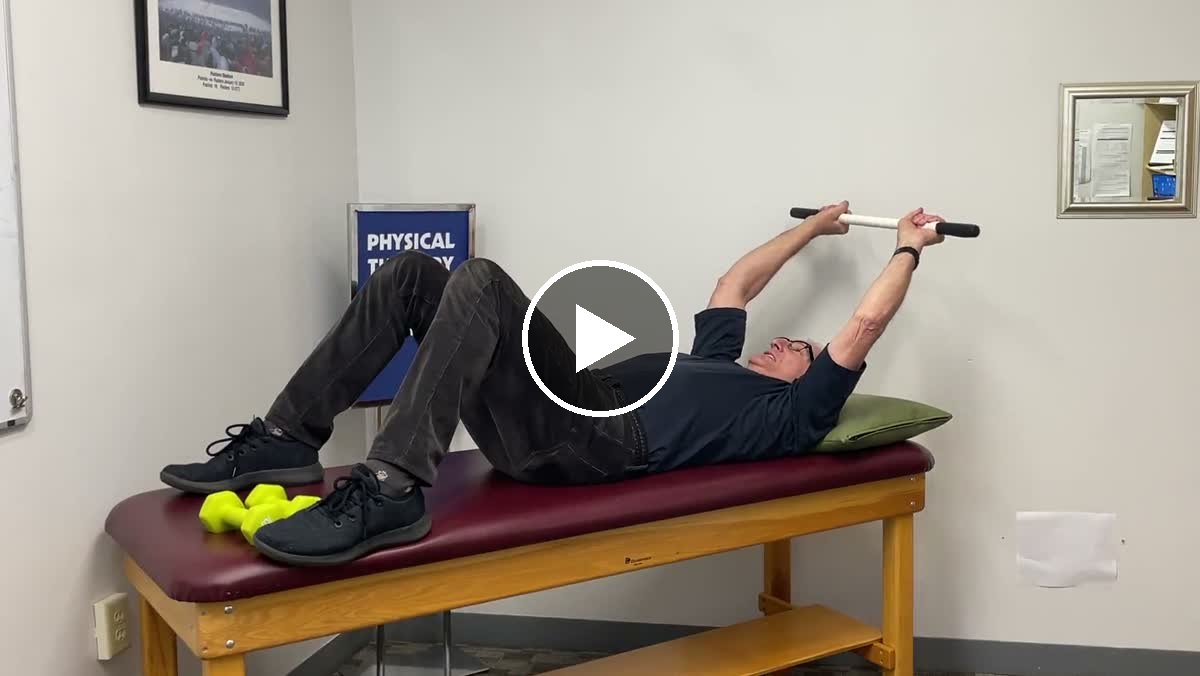
4. Overhead stretch with a cane, lying down
You can do this one on your bed. Your good arm helps the sore one.
- Lie on your back with a pillow under your head and your knees bent.
- Hold a cane, a broom handle or an umbrella with both hands, about shoulder width apart, resting near your stomach.
- Use your good arm to help lift both arms up and over your head, as far as is comfortable. Hold and count to 5.
- Bring it slowly back down and rest for a moment.
- Do 7 to 10, nice and easy. You can add more sets based on your comfort, but more is not always better.
As John puts it, "I don't want to rush it." Never push past the point of pain.
Can physical therapy help shoulder pain at night?
Yes. Physical therapy is a common treatment for many of the shoulder problems behind night pain, such as rotator cuff tendinitis, rotator cuff tears and frozen shoulder. The goal is to treat what is causing the pain, so the shoulder hurts less day and night.
Our 4 Phase Treatment Approach
- Phase I: Getting pain and inflammation under control.
- Phase II: Improving your motion and mobility without aggravating your pain.
- Phase III: Improving strength and core stability to protect you and prevent future injuries.
- Phase IV: Building your strength and endurance to a higher level, so you can get through the day or work without tiring, with more confidence and a lower risk of reinjury.
A view from above: what sets us apart
People should not have to wait, guess or struggle when dealing with pain, post-surgery recovery or movement issues. At Physical Therapy & Sports Rehab (PT&SR), we make it easy:
- Quick access: seen within 10 business days or less
- The same therapist, every visit
- One-on-one treatment: your session is never shared or rushed
- 400+ five-star reviews
- 60% of our patients are returning or referred by family and friends
- 40+ years of independent private practice
You can read more about how we treat shoulder pain, or download our one-page handout, Shoulder Pain at Night.
When should you see a doctor first?
Most shoulder pain at night is not an emergency. But some signs should not wait.
Call 911 if you have sudden pressure or crushing pain in your shoulder, especially if the pain spreads from your chest to your left jaw, arm or neck, or comes with shortness of breath, dizziness or sweating. This can be a sign of a heart attack.
Go to the emergency room if you just had a bad injury and your shoulder is very painful, swollen, bruised or bleeding.
Contact your doctor soon if you have:
- Shoulder pain with a fever, or if you feel unwell
- A shoulder that has changed shape or is badly swollen
- Pins and needles that do not go away, or no feeling in your arm
- An arm or shoulder that feels hot or cold to the touch
- Pain that started after a fall or another injury
- Very bad pain in both shoulders
- Pain that does not start to ease after 2 weeks of home care
Sleeping with shoulder pain FAQs
Should I use heat or ice before bed?
Either one can help, so try both and see which feels better. Ice wrapped in a towel for up to 20 minutes can quiet the nerves carrying pain and bring more blood flow to help the area heal. Moist heat, like a warm shower, can loosen a stiff shoulder.
How long does shoulder pain at night last?
It depends on the cause and how long you have had the pain. If you waited and it has become a long-term problem, getting better is usually a slow, steady process, but you should see progress each week. It is not unusual for us to see someone three times a week for the first 2 to 3 weeks to get them moving in the right direction.
Do I need a doctor's referral for physical therapy in Massachusetts?
No. You can see a physical therapist in Massachusetts without a doctor's referral, but some insurance plans may require one. Call us at (781) 769-2040 and we can check your plan, or read our article on physical therapy without a referral.
Book a visit in Norwood or Norfolk
If your shoulder keeps waking you up, you don't have to just live with it. Visit our Norwood and Norfolk clinics, call (781) 769-2040 or book online.
Sources
- MedlinePlus: Rotator cuff, self-care
- MedlinePlus: Shoulder pain
- NHS: Shoulder pain
- NHS: Frozen shoulder
- AAOS OrthoInfo: Rotator cuff tears
- AAOS OrthoInfo: Shoulder impingement and rotator cuff tendinitis
- APTA ChoosePT: Physical therapy guide to rotator cuff tendinopathy
- Cleveland Clinic: How to relieve rotator cuff pain at night